
Okay, so check this out—blockchain explorers are boring until they aren’t. Wow! They suddenly matter when you need to prove ownership, track an airdrop, or figure out why your NFT transfer didn’t show up. My instinct said explorers were just lookup tools. Initially I thought that, but then realized they’re the user interface for blockchain truth—transparent, unforgiving, and very very helpful when things go sideways.
Honestly, using a Solana explorer feels different than Ethereum explorers. Hmm… the speed and the volume on Solana change the UX calculus. Short confirmation times mean more transactions to sift through. On one hand that’s great for throughput. On the other, it makes clean filtering and reliable indexing more important than ever. Seriously? Yes—because with thousands of transactions per block, a weak explorer makes you guesswork through noise.
Here’s the thing. A good explorer should do three things well: surface clear transaction histories, provide robust NFT tracking, and make token metadata and mint info easy to audit. Whoa! Those sound basic, but they separate tools from time-savers. I’ve used a few in the space. Some felt like beta software stuck on yesterday’s assumptions. Others gave me exactly what I needed—immediate clarity without hunting through raw RPC logs.
Let me be candid—I’m biased toward fast interfaces. I like dashboards that don’t hide the data behind ten clicks. My bias isn’t blind though. I want accuracy, too. Initially I favored flashy visuals. Actually, wait—let me rephrase that: flashy is fine, but if the data’s stale or mis-indexed, the flash is useless. So I learned to prioritize indexing fidelity and API reliability above aesthetics.
What to look for in an explorer (NFT tracker + token tracker)
First off—search and filtering must be excellent. Seriously. You need filters for mint address, owner, signature, program, time window. Medium-length explanations are useful here because folks often ask for step-by-step details. One short cut I use: search by mint address when tracking an NFT drop. On the surface that seems obvious, though actually the tricky part is making sure the explorer resolves the metadata correctly and links to the right on-chain creators.
Second—clear token metadata. Wow! You should be able to see the metadata URI, creator addresses, and whether the metadata is verified or mutable. My instinct said “trust creators,” but I’ve been burned by mixed metadata states—some tokens point to outdated JSON or broken image CDN links. A solid token tracker flags that stuff. It tells you if the metadata hash matches on-chain values, for instance, which is very very important when buying secondary.
Third—wallet and ownership history. This matters for risk assessment. Hmm… a clean ownership timeline helps you spot wash trading or repeated transfers that suggest a token might be rug-prone. On one hand, transfer volume can be normal for trading. On the other hand, patterns of rapid transfers between freshly created wallets may raise red flags. I look at token activity alongside wallet creation dates. Something felt off about a few sellers I checked; the history told the story.
Check the API access. If you build tools or automate alerts, you need an API that behaves. Initially I used simple HTTP pulls. Then I hit rate limits, and I had to throttle. Actually, wait—let me rephrase that: I learned to prefer explorers offering predictable rate limits and webhook support. That way, I get push updates for high-value mints without hammering the public RPCs.
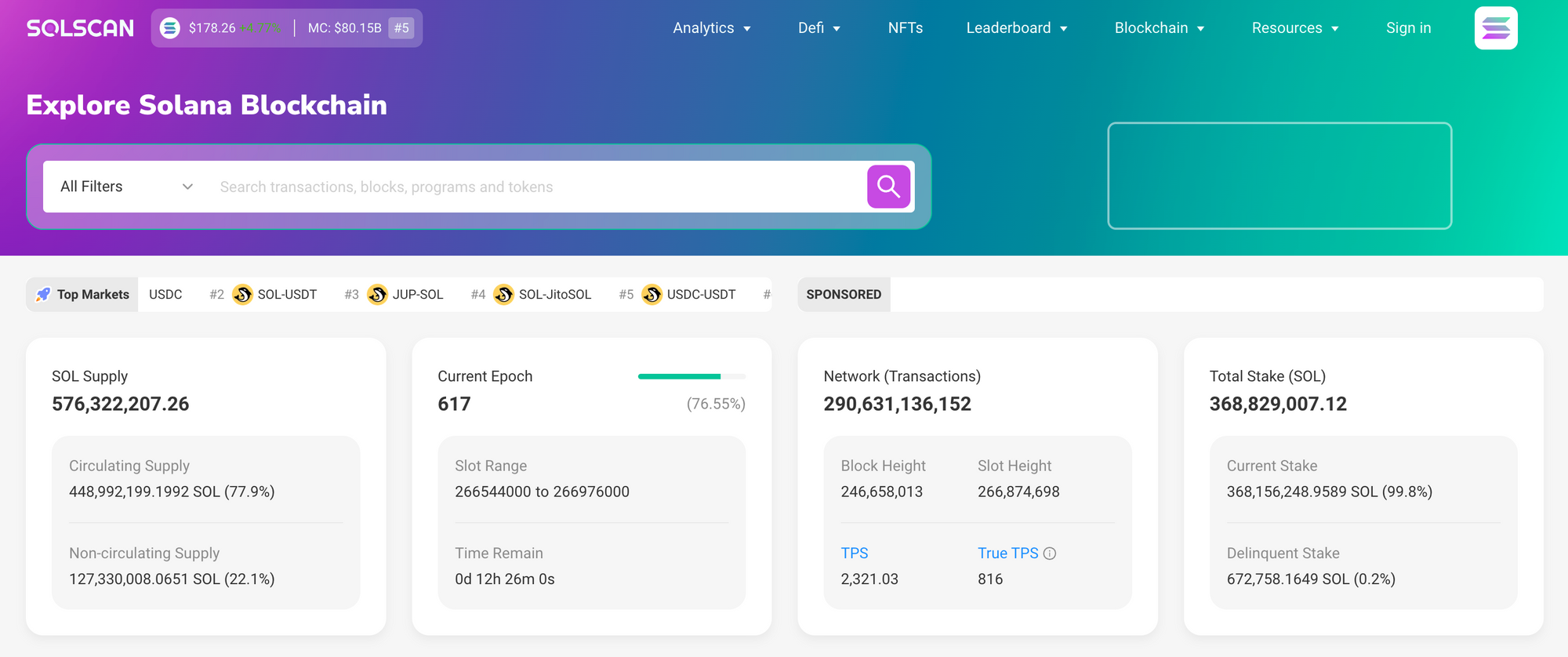
Now, if you want my practical rec—try solscan once and compare. I use solscan because it balances speed, clarity, and deep Solana-specific details. It’s not perfect, and it has quirks (oh, and by the way… sometimes the UI changes faster than my muscle memory), but it surfaces the exact token and NFT fields I check daily. solscan
Why that recommendation? Because I’ve tracked mint events, validated metadata, and followed creator royalties there. My gut said their indexing was thorough when I tracked a large drop two weeks ago and the explorer resolved nested program instructions cleanly. On one occasion I needed to debug a failed marketplace transfer and the instruction breakdown was detailed enough to spot a mismatch in expected accounts.
Another tip—look for explorers that break down program instructions. Whoa! Seeing the raw transactions is fine. But seeing parsed instructions, program names, and affected accounts is where you get actionable insight. When a swap or transfer fails, that granular view tells you whether the error was signer-related, rent-exempt, or something else. It’s faster than guessing and then refreshing your wallet to see if the funds bounced back.
Wallet linking is underrated. I prefer explorers that let me mark certain addresses as “known” or tag them with notes. That’s part of workflow. Personally, I tag addresses when I research a project: creator, marketplace, treasury. Later, when something odd appears, the tags give immediate context. It’s silly, but that small UX feature saves time and reduces mistakes. You become less likely to send tokens to a wrong address because you recognize patterns.
There’s also the social layer to consider. Some explorers integrate token holders lists and rarity insights for NFTs. Hmm… that can be helpful, though it isn’t a substitute for on-chain verification. On one hand, rarity calculators add value. On the other, they sometimes misclassify attributes because of incomplete indexing, so take those with a grain of salt. I’m not 100% sure which metrics will matter long-term, but for now, rarity + holder concentration is a quick heuristic.
Security features matter too. Look for explorers that display program audits, verified collections, and warnings about suspicious tokens. Here’s what bugs me about many platforms: they present the data but don’t flag obvious mismatches. A tiny flag or warning—just a simple “metadata mismatch” or “potential scam”—can prevent a lot of grief.
FAQ
How do I verify an NFT’s authenticity?
Start with the mint address. Then check creator addresses and metadata hash against the on-chain values. Medium-level verification includes checking the update authority and whether the metadata URI resolves correctly. If you see mismatched hashes or a mutable update authority that looks unfamiliar, pause. On one hand the metadata can be legitimately updated by an artist. Though actually, if you didn’t expect updates, that’s another red flag.
Can I rely on explorers for real-time alerts?
Yes, but choose wisely. Some explorers offer webhooks or push notifications for account changes and new mints. These are useful for drops or monitoring high-value wallets. My experience: if you depend on alerts for trading, double-check latency and fallback options—if the webhook misses something, you’ll want a polling backup. Somethin’ to keep in mind.
What about token tax and history export?
Look for CSV export or API endpoints that return historical transfers with timestamps and amounts. That’s the foundation for any tax or accounting workflow. Personally, I export raw transaction lists and reconcile them against exchange statements; it’s not glamorous, but it works. Also, keep copies—blockchain explorers can change UI or data presentation, but raw exports help you keep records.